Designing learning that engages the head, moves the heart and builds capability.
Definition
Learning Architecture is the intentional design of learning experiences, environments and systems that enable people to think deeply, creatively and critically, develop understanding and capability, and remain curious about what they might discover next.
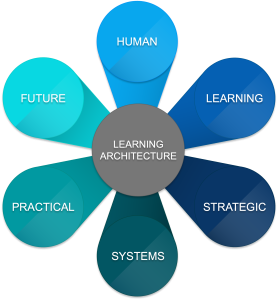
Learning Architecture brings together learning science, pedagogy, curriculum, technology, creativity, narrative, human needs and strategic thinking to design learning that works, both for the people experiencing it and the context in which it exists.
What is Learning Architecture?
Learning Architecture is concerned with both the whole and the parts.
It considers the purpose, people, context and future needs of a learning challenge while also engaging deeply with the learning itself: the content, pedagogy, activities, narratives, interactions, technology and experience.
It is not simply about designing what people will learn. It is about understanding why they need to learn, who they are, how they learn, what will engage them, what constraints exist, and how the learning can remain relevant as circumstances change.
The six design lenses
Learning Architecture looks at the whole learning ecosystem rather than designing the learning experience in isolation.
The six lenses aren’t six sequential stages. They’re six perspectives through which a Learning Architect examines a challenge.
Human Lens

Who is this learning for?
Needs, experiences, identity, motivation, accessibility, relationships and different ways of engaging.
Learning Lens

What needs to happen through learning?
Knowledge, understanding, thinking, curiosity, creativity, critical thinking, skills and development.
Strategic Lens

Why does the learning matter?
Purpose, objectives, priorities, outcomes, curriculum, organisational goals and stakeholder needs.
Systems Lens

Where does the learning sit?
People, culture, technology, processes, environments, relationships and the wider ecosystem.
Practical Lens

Will it actually work?
Time, resources, usability, scalability, accessibility, implementation, capability and constraints.
Future Lens

Will it remain relevant?
Adaptability, emerging needs, technology, changing contexts and the capacity to evolve.
Why it exists
Learning Architecture exists to design learning that is meaningful to people, purposeful within its context and capable of evolving with the world around it. It brings together knowledge of learning, people, technology, creativity and context to create experiences and environments that deepen understanding, develop capability, stimulate thinking and curiosity, and open possibilities for the future.
What I believe
Design for today. Anticipate tomorrow.
Learning should be relevant now while remaining adaptable to future needs. I believe learning should be designed with the future in mind.
Design for people, not an imagined average learner.
Account for differences in experience, needs, interests, accessibility, motivation, confidence and context.
Design for thinking, not just transmission.
Learning should create opportunities to question, explore, interpret, create, connect and think critically and creatively.
Make complexity meaningful.
Complex ideas don’t necessarily need to be simplified beyond recognition; they need to be made understandable and accessible.
Connect the parts without losing the whole.
Content, pedagogy, technology, experience, assessment, context and purpose should work together rather than operate as disconnected components.
Design for flexibility.
Where appropriate, learning should allow different pathways, levels of challenge, modes of engagement and opportunities for extension or adaptation.
Design for the real world.
An excellent learning design that teachers, learners or organisations cannot realistically use isn’t an excellent design.
Create possibilities, not prescriptions.
Learning should open up ideas, curiosity, perspectives and possibilities rather than dictate a single way of thinking or responding.
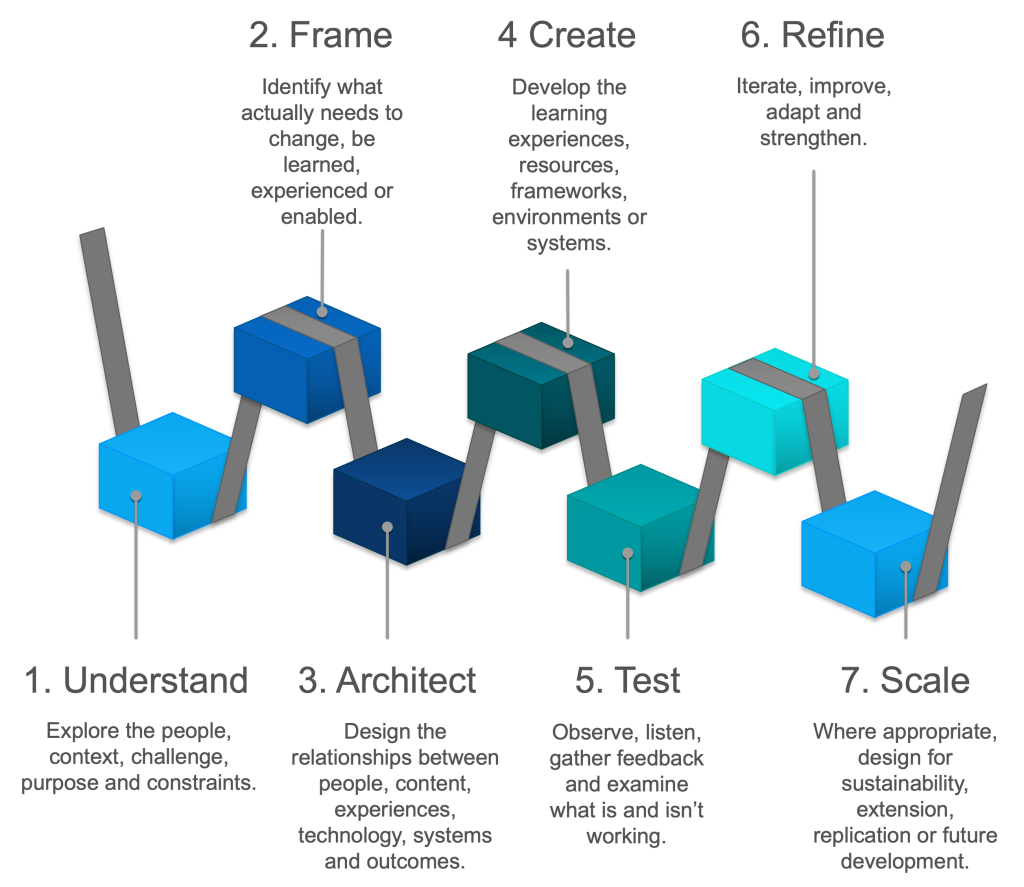
How I work
Where Learning Architecture can help
Learning challenges rarely arrive neatly packaged as “instructional design problems”. They often sit at the intersection of people, learning, technology, culture, strategy and practical constraints.

Designing something new
Creating a new learning program, platform, curriculum, professional learning experience or educational initiative from the ground up.
Examples:
Digital platforms • curriculum initiatives • professional learning • student programs • capability development
Transforming existing learning
Reimagining learning that has become outdated, overloaded, difficult to use or disconnected from contemporary learners.
Examples:
Program redesign • digital transformation • curriculum refresh • learning experience redesign

Making complexity understandable
Taking complex ideas, information or emerging issues and turning them into learning experiences people can understand, explore and apply.
Examples:
Digital Technologies • eSafety • social issues • emerging technologies • complex historical topics
Designing for different learners
Creating learning that can respond to different ages, abilities, experiences, contexts, motivations and ways of engaging.
Examples:
Differentiation • accessibility • personalised learning • flexible delivery • diverse audiences
Building capability and culture
Designing learning that supports educators, leaders, teams or organisations to develop shared understanding, confidence and capability.
Examples:
Professional learning • leadership development • cultural change • organisational capability
Preparing for what comes next
Designing learning that remains relevant as technology, society, work and the needs of learners change.
Examples:
AI • digital citizenship • future skills • emerging technologies • changing social contexts
What does good Learning Architecture create?
The principles of Learning Architecture have emerged through years of designing learning across different contexts, technologies, audiences and challenges.
Deeper Understanding
Making meaning rather than simply receiving information.
Curiosity
Creating questions as well as answers.
Critical & Creative Thinking
Questioning, connecting, imagining, interpreting and creating.
Connection
Recognising people, relationships, experiences and context.
Capability
Developing knowledge, skills and confidence.
Possibility
Opening new ways of seeing what might be possible.
The measure of good learning is not simply how much information was delivered, but what becomes possible because the learning existed.
Learning Architecture in Practice
Complex Learning Challenges
Case Study – Click Against Hate

Transforming an evolving face-to-face program into a national digital learning platform.
I analysed an existing program, restructured its learning architecture, developed objectives and activities, designed narratives and interactions, shaped teacher and student experiences, and worked through multiple development iterations to create a scalable digital learning environment.
3,000+ schools | Every Australian state & territory | Almost 4,000 teachers
The Architect’s View
The challenge wasn’t simply digitisation. It was designing a learning experience that could retain and enhance the quality of the original program while becoming scalable, flexible and usable within the realities of a variety of classroom contexts.
Case Study – Holocaust Education Australia
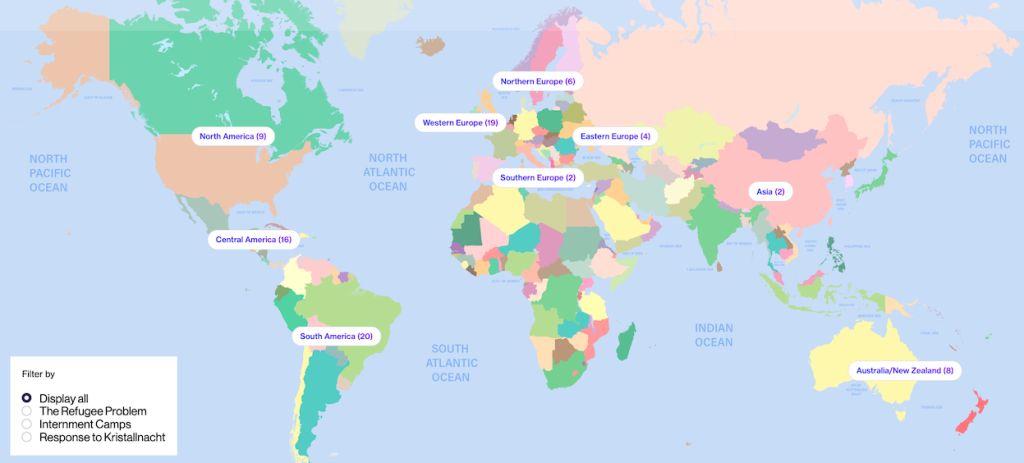
Turning global resources into an Australian digital learning experience.
Beginning with extensive international research and comparative analysis, I established the conceptual scope and sequence, identified Australian connections, curated resources and designed an interactive, museum-like experience in which students can explore stories and artefacts through their own learning journey.
600+ schools | Every Australian state & territory | Almost 700 teachers
The Architect’s View
The challenge wasn’t simply curating information about the Holocaust. It was designing a coherent learning journey from an enormous body of international resources that would allow contemporary Australian students to explore, question and make meaning.
Original Thinking & Frameworks
Case Study – Narrative Learning Framework™
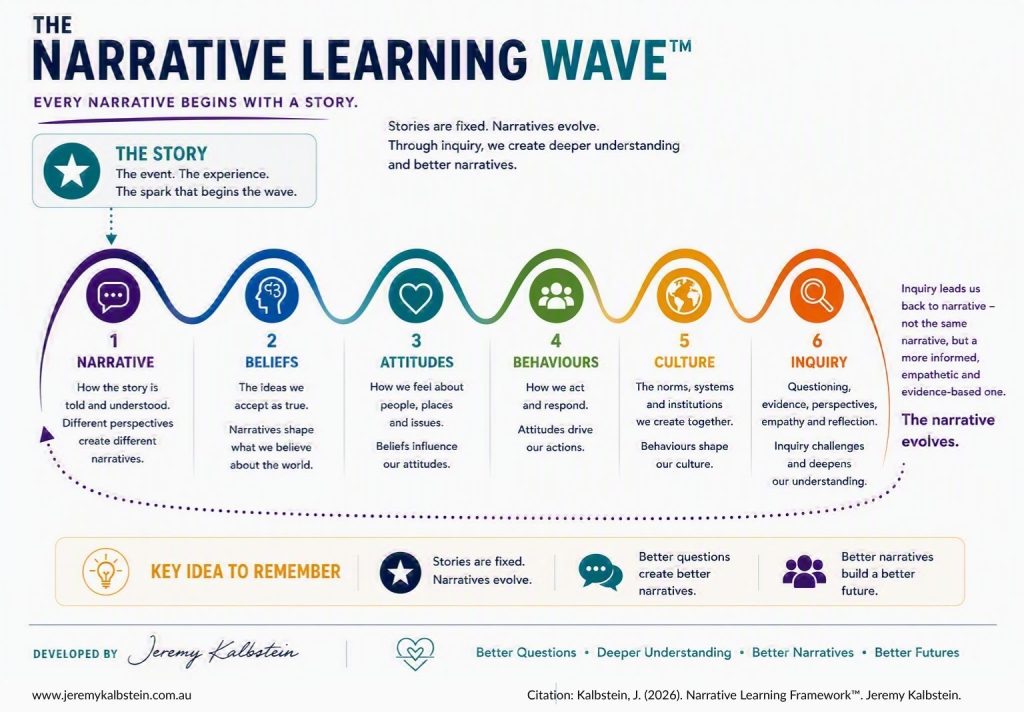
Exploring how narratives shape learning, thinking, relationships and resilience.
An original framework and suite of interconnected models developed to translate ideas about narrative and learning into practical strategies for educators and learning designers.
The Architect’s View
The challenge wasn’t simply to connect stories with learning. It was to understand how narratives influence the way people think, interpret experiences, form beliefs and connect with others—and then turn those ideas into a coherent framework that educators could understand, apply and adapt across different learning contexts.
Learning Across Contexts
Digital Technologies
Curriculum interpretation • infographics • explainer videos
The Architect’s View
How do you make a new and unfamiliar curriculum understandable and useful for teachers? I translated complex curriculum concepts into visual explanations, infographics and videos that educators could immediately understand and use.
STEAM Learning
Hands-on programs • incursions • holiday programs
The Architect’s View
How do you make STEAM engaging without sacrificing learning, accessibility or practicality? I designed hands-on experiences that balanced creativity, curriculum connections, age appropriateness, accessibility, cost and the realities of delivering learning in schools.
Professional Learning

Presentations • workshops • educator capability
The Architect’s View
How do you turn professional learning from information delivery into an experience that makes people think? I design presentations and workshops that combine evidence, narrative, interaction and practical application to create meaningful learning experiences for educators.
Storytelling
Educational storytelling • fiction • narrative design
The Architect’s View
What happens when the story itself becomes the learning environment? I explore ways narrative can carry knowledge, provoke curiosity and create opportunities for learners to think, question, imagine and create.
Have a complex learning challenge?
Sometimes the challenge isn’t finding another resource, program or training course. It’s understanding what the learning actually needs to achieve and designing it so that it works for the people, context and future it is intended to serve.